JULY 2025

Music Venue Trust:
London Part 2

Words by Craig McLean
Photographs by Kalisha Quinlan-Davies

But it’s not abstract.  

“To the biggest venues in the country and around the world – if artists selling out your arenas and your stadiums started in grassroots venues, what are you doing to keep them alive?”  

So said Myles Smith from the stage of The O2 on Saturday 1st March. The Luton-born singer-songwriter was picking up the Rising Star Award at the BRIT Awards – an evening that the British Phonographic Industry, which runs the awards, characterise as the biggest night of music television all year. And he wasn’t the only one taking a second in the biggest moment of his career to address the nation via the ITV cameras.   

“We wouldn’t be a band, and a lot of the artists here would not be bands either, without the UK’s incredible independent venues,” said Georgia Davies, bassist with The Last Dinner Party, as her band collected the BRIT Rising Star award. “They are the lifeblood of the music industry, and they are dying. If venues like this – like The O2, like arenas, stadiums across this country – contributed even a tiny bit toward these independent venues, then we would not be losing them at this alarming rate. We wouldn’t be here without them; none of this would be happening without them.”   

These BRIT winners were speaking from the stage in a London venue that’s at the peak of the industry: The O2 sold 2.6 million tickets in 2024, cementing the 20,000-capacity arena’s long-running status as the world’s busiest live entertainment arena. But to get to that huge stage, Davies and her bandmates, like Smith, had begun their careers in local venues.  

The Last Dinner Party’s first show was in November 2021 at The George Tavern in East London; tickets were £5.50. Their second was at Brixton’s The Windmill, another boozer that’s another iconic ground-zero London gig. Shortly after that, footage from a February 2022 show in another South London spot, Venue MOT, was posted on YouTube. It catalysed a wave of music industry interest. But for the band, such was their passion for small, local venues that they felt they’d already arrived. The Windmill “was such a holy grail, a beacon, when we moved to London – and then it was our second show,” frontwoman Abigail Morris told The Guardian. “It was like: ‘Well, we’ve done it. Nowhere up from here!’” 

Smith was equally inspired by (literally) his earliest show. “I remember playing my first gig at a local pub,” he said earlier this year. “There were about 10 people there, and half of them were family. But that night, I realised this was what I wanted to do for the rest of my life.” Like Mark Davyd, the musician felt that magic the first time he set foot in a gig under his own steam.  

In her call for bigger venues, and the companies who run them, to step in to help smaller venues, Georgia Davies was echoing something for which MVT have been agitating for a while. Last year, after a decade’s lobbying, the government agreed. In November, in response to the Culture, Media and Sport Select Committee’s report on grassroots music venues, Creative Industries Minister Sir Chris Bryant (in the words of the UK government website) “called on the live music industry to work together to introduce a voluntary levy on all stadium and arena tickets to help support grassroots venues, festivals, artists and promoters – in agreement with the Committee’s recommendation”.  

At time of writing, the music industry has yet to come up with any proposals to meet that suggestion. Davyd is hopeful that they will, heading off the alternative, the imposition by the government of a statutory levy. “I sincerely hope that the music industry are wise enough to realise that the voluntary levy is in their own self-interest,” he says. “It’s not charity. It’s research and development. It’s investment in the future. It’s what every big company should be doing.”  

He has direct experience of the importance of what we might call that seed investment in those building blocks venues. At his 250-capacity venue in Tunbridge Wells, he recalls seeing Coldplay, Oasis and Muse, the latter “an amazing one – I think there were 25 people there. I saw Adele supporting Jack Peñate. When she went on at 8.30, there might have been 17 people in the room. But there wasn’t a single person there who didn’t think: ‘Well, that person’s got it and is going somewhere.’”  

Meanwhile, while we wait for the music industry to not so much pay-it-forwards as pay-it-backwards, artists are taking matters into their own hands. Coldplay are donating 10% of their ticket proceeds from their eight UK stadium dates this year, at Hull’s Craven Park and London’s Wembley, to MVT. They announced the initiative by placing a poster in the window of the Dublin Castle pub in Camden, North London. The scene of their first ever show, in February 1998, it is, remarkably and brilliantly, still going as a live venue.  

Also paying homage to her spit’n’sawdust roots: Katy Perry. The American megastar’s first UK show was at The Water Rats, the tiny, 200-capacity venue in London’s Kings Cross, in September 2008. For her five UK arena dates in 2025, she’s donating £1 from every ticket sale to MVT. Those monies, like the Coldplay funds, will be collected by the Liveline Fund, a collaboration between the charity and and live music advocate Save Our Scene (SOS).  


“We’ll distribute money to venues for infrastructure, support for their programmes and, in too many cases, to [help] tackle financing emergencies they have,” explains Davyd. “We will also put it into artists, to make sure more can go on tour in these venues. And we’ll be ensuring that promoters also benefit, because they’re a vital part of this tripod support. It’s venues, artists and promoters for us – it always has been.”  

Other artists, though, unable to wait for that trickle-down generosity from the biggest artists in the world, are taking matters into their own hand.  

London band Snapped Ankles are both promoting their new album Hard Times Furious Dancing and funding their upcoming tour with a pithily titled “Stickstarter” campaign, a much-needed financial crutch. Fans can buy one of a suite of bespoke band experiences: an online fitness class with the band “dressed in full ghillie suits”, banner-making workshops, a secret listening party at a hidden location in Epping Forest.   

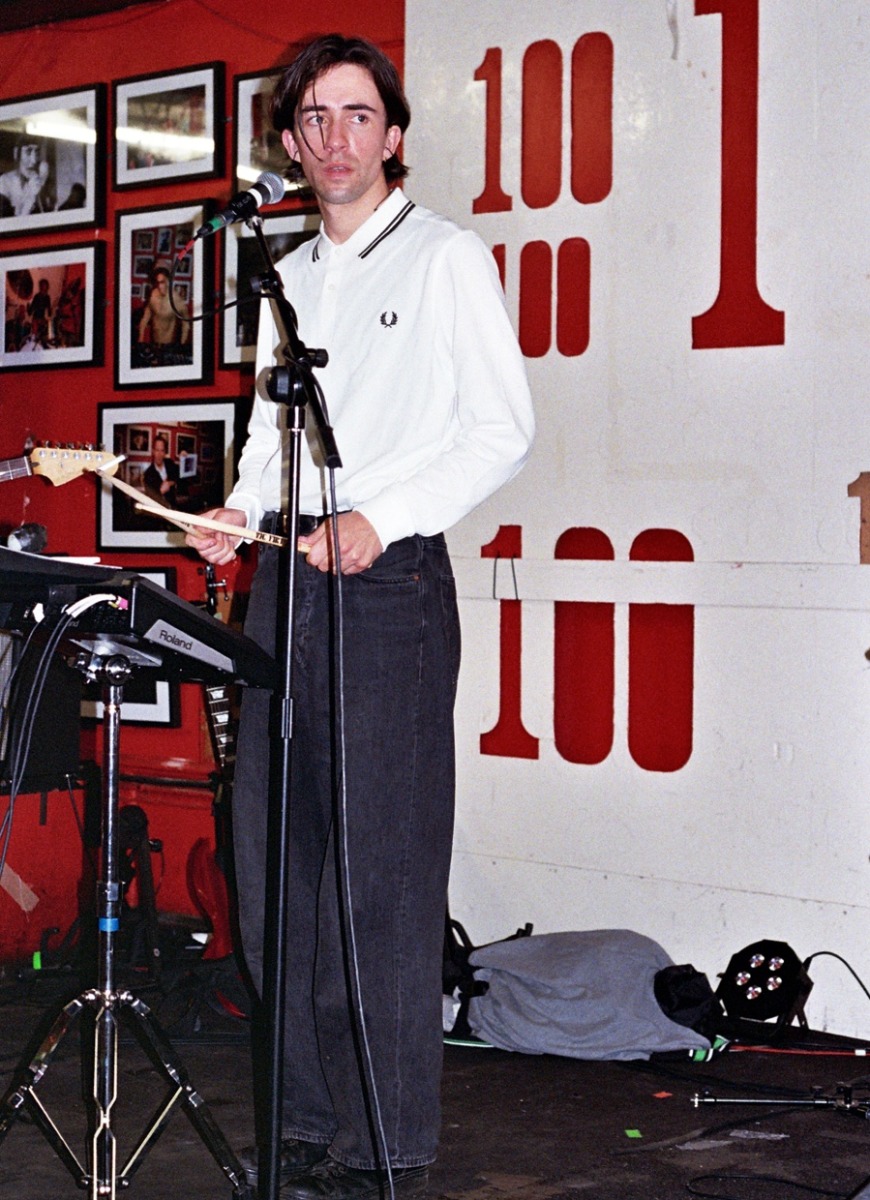
It’s an idea powered by the same impulse that animates their band and their love of gigging: music is something that brings us together, to celebrate in defiance of that bleak economic landscape that’s causing headaches for the Hortons at the 100 Club. Furious dancing for hard times.  

“It’s a coping mechanism, that’s what we’re offering,” says frontman Paddy Austin. “The rituals of being a band and performing on stage and being in a communal gathering have an element of catharsis. Whether you’re going to see nosebleed noise terror or ritualistic religious drone music, it’s one of the truths of us humans getting together. So, with our type of music, the idea is: let’s dance through this misery.”  

Their Stickstarter is, too, an innovative response to a sticky problem for a well-established band on their fifth album who can sell out 500-capacity clubs across the country: cash flow.  

“In 2019 we did 60 gigs,” says Austin of the band’s last full period of UK touring. “That’s two two-week tours, then two to three festivals each weekend across the year up until October. Touring loses money, and you’re expected to make your money by selling merch… which means at the end of the tour you’ve got something in the bank.”  


He estimates they earned £40,000 in fees by the end of that period, but they spent over 80% in travel, accommodation and basic living expenses. That left roughly £5000, “which is enough to hire a studio and buy lunch for a month… So you can focus on your creativity and not on your Monzo account.” But more recently, a winter 2021/22 tour of America cost them £20,000, leaving their band pot empty.    

Cue some thinking outside of the box for Hard Times Furious Dancing: they workshopped the album, live, in front of 400 fans over two nights at Venue MOT, charging £12 a ticket “plus an unavoidable card fee”. And, now, to help bankroll their 2025 touring, they’re pimping out their free time in PT sessions and woodland rambles.     

They’re not the only artists putting their bodies on the line. Late last year, ahead of a 13-date UK and Europe tour, Kate Nash launched her Butts for Tour Buses campaign. Signing up to an OnlyFans account, the singer-songwriter sold pictures of her, well, butt to fund her tour.     

“I had five days in between two tours [to raise cash], and I genuinely was a bit stressed, feeling the financial pressure of touring and releasing a record in the same year,” explains an established artist with 17 years’ experience and over 100 million Spotify plays. “I had to let go of an employee for some European dates, and I hated having to do that. So I was like: would this idea be a crazy thing… or could I do it and make a punk statement?”     

She went for it, and was upfront with her behind – a playful but pointed highlighting of the desperate measures being forced upon artists. Butts for Tour Buses went viral, splashing across the mainstream media, starting a conversation way beyond indie music circles, and propelling Nash all the way to the Houses of Parliament, where she performed at MVT's launch of this year’s report. More importantly, it worked. “It made me able to bring back the employee that I let go of for the rest of the tour dates, and to pay my invoices for the tour that were outstanding. And it's still financially supporting me.”     

Two thumbs up to those artists who can, but not everyone is able to dress up in ghillie suits or dress down to their underwear to promote their music and their tours. So, while big hitters are handing down money from their stadium and arena tours, and while we wait for the music industry to sort out that levy, we are stepping forward with a hand up: this new series is here to shine a light on the local bands, local venues and local scenes that, ultimately, make for global phenomena.     

And for all the challenges in the grassroots music sector Mark Davyd, certainly, is optimistic.     

“Live music has never been more popular and more valued by people. The amount that people are prepared to pay for tickets, the number of shows that people are going to, the number of live music fans, have never been bigger. In the end, Britain is a music country. We love live music, and we will find solutions.”  Mark Davyd 

Or, as Georgia Davies said in her rallying cry during British music’s biggest night: “I want to say, to those artists who are playing independent venues all over the country tonight: keep going, because that’s the best kind of art there is. And in a time where art is under threat, that is the most important thing to keep supporting.”  

We second that emotion.  

Read Part 1